
Introduction
In modern automotive and industrial machinery, vibration control and torque absorption are critical to ensuring performance and durability. One small yet powerful component that plays a big role is the flywheel spring. Integrated into flywheel systems, these springs act as shock absorbers, improve power transmission, and protect other components from premature wear.
What Is a Flywheel Spring?
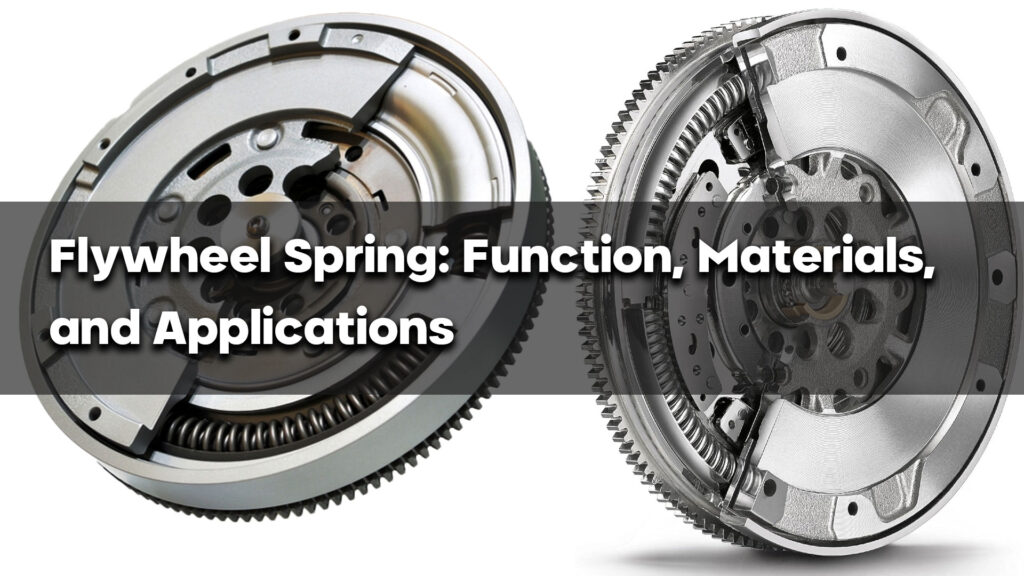
A flywheel spring is a specially designed compression or torsion spring placed inside a flywheel assembly, commonly found in clutch systems and dual mass flywheels (DMF). Its job is to absorb torque fluctuations between the engine and the transmission, reducing vibration and improving driving comfort.
Key Functions of Flywheel Springs
-
Torque Dampening
The spring cushions sudden torque peaks, preventing direct impact on the gear system and transmission shafts. -
Vibration Reduction
By absorbing oscillations from the engine, flywheel springs help reduce noise and harshness in vehicles and machinery. -
Extended Component Life
A properly designed spring minimizes wear on the clutch disc, gears, and flywheel surfaces, lowering maintenance costs.
Materials Used in Flywheel Springs
The choice of material greatly influences spring performance. Common options include:
-
Alloy Steel (65Mn, 50CrVA): High tensile strength and fatigue resistance.
-
Chromium-Silicon Steel (55CrSi, 60Si2MnA): Excellent for heavy-duty and high-stress applications.
-
Stainless Steel: Resistant to corrosion, suitable for humid or chemically exposed environments.
Applications of Flywheel Springs
-
Automotive Industry
-
Single-mass and dual-mass flywheels
-
Manual transmission clutch systems
-
-
Industrial Machinery
-
Generators and compressors
-
Power transmission flywheels
-
-
Heavy Equipment
-
Diesel engine machinery
-
Construction and agricultural equipment
-
Why Flywheel Springs Matter for Engineers and Buyers
Choosing the right flywheel spring can make a significant difference in product reliability and user experience. Engineers need to consider factors such as torque load, vibration frequency, and expected lifespan. Buyers and procurement professionals should focus on material quality, heat treatment standards, and supplier manufacturing capability to ensure long-term performance.
Closing Note
Flywheel springs may appear to be minor components, but their impact on power transmission, durability, and comfort is undeniable. Whether for automotive clutches or industrial flywheels, investing in high-quality springs ensures smoother operation and greater reliability.