
Dual Mass Flywheel Compatibility Guide: OE Cross-Reference Numbers
A dual mass flywheel (DMF) is a critical drivetrain component that reduces torsional vibration and smooths power delivery in modern manual and dual-clutch transmissions. Selecting the correct flywheel for a specific vehicle requires matching the ring-gear tooth count, bolt pattern, and OE (Original Equipment) part number.
Below is a reference guide covering 9 flywheel assemblies across Volkswagen Group, Porsche, Kia, and Hyundai platforms. Use this table to quickly cross-reference compatible vehicles and part numbers for your sourcing needs.
Flywheel Compatibility Table
| Code | Specification | Compatible Vehicles | Reference Numbers |
|---|---|---|---|
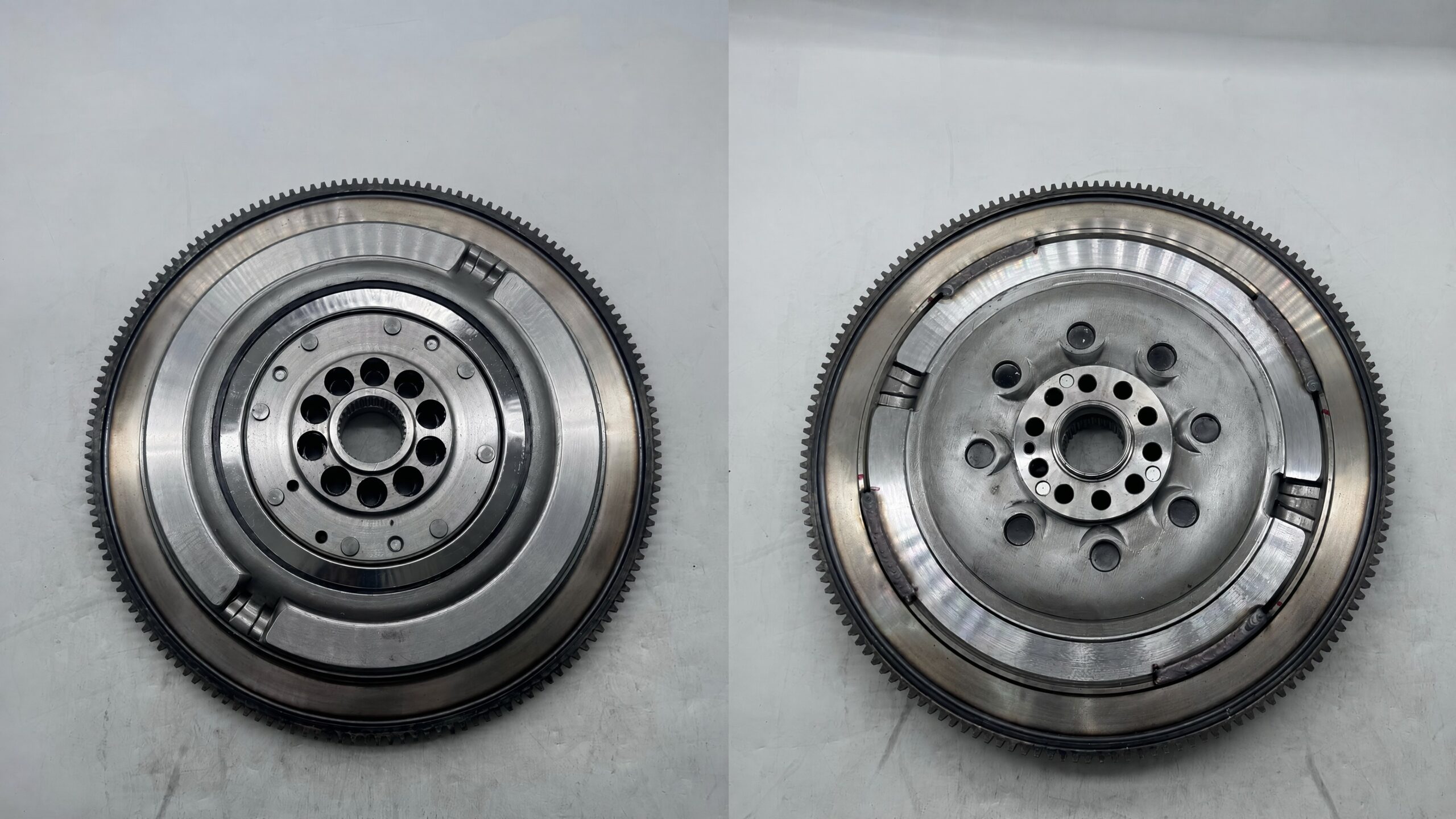
| S0005 | Flywheel (non-dual-mass) | Porsche Panamera 970 (2010-2016) | OEM: 97011402010 |
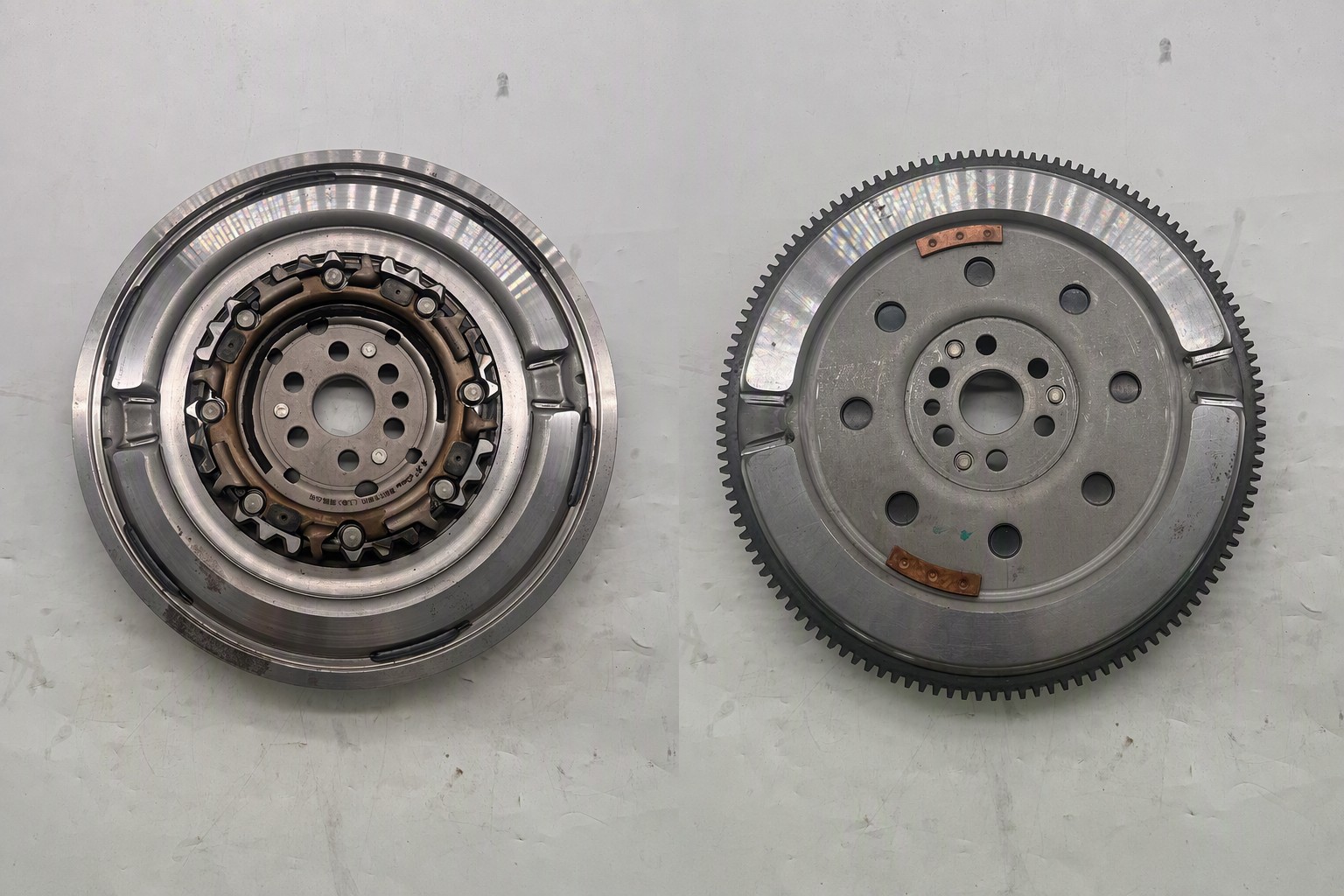
| S0006 | Flywheel assembly, 127 teeth | Kia K3 1.4T (2019) / Hyundai Elantra 1.4T (2017-2019), DCT | OEM: 23200-03950 / 23200-03951 |
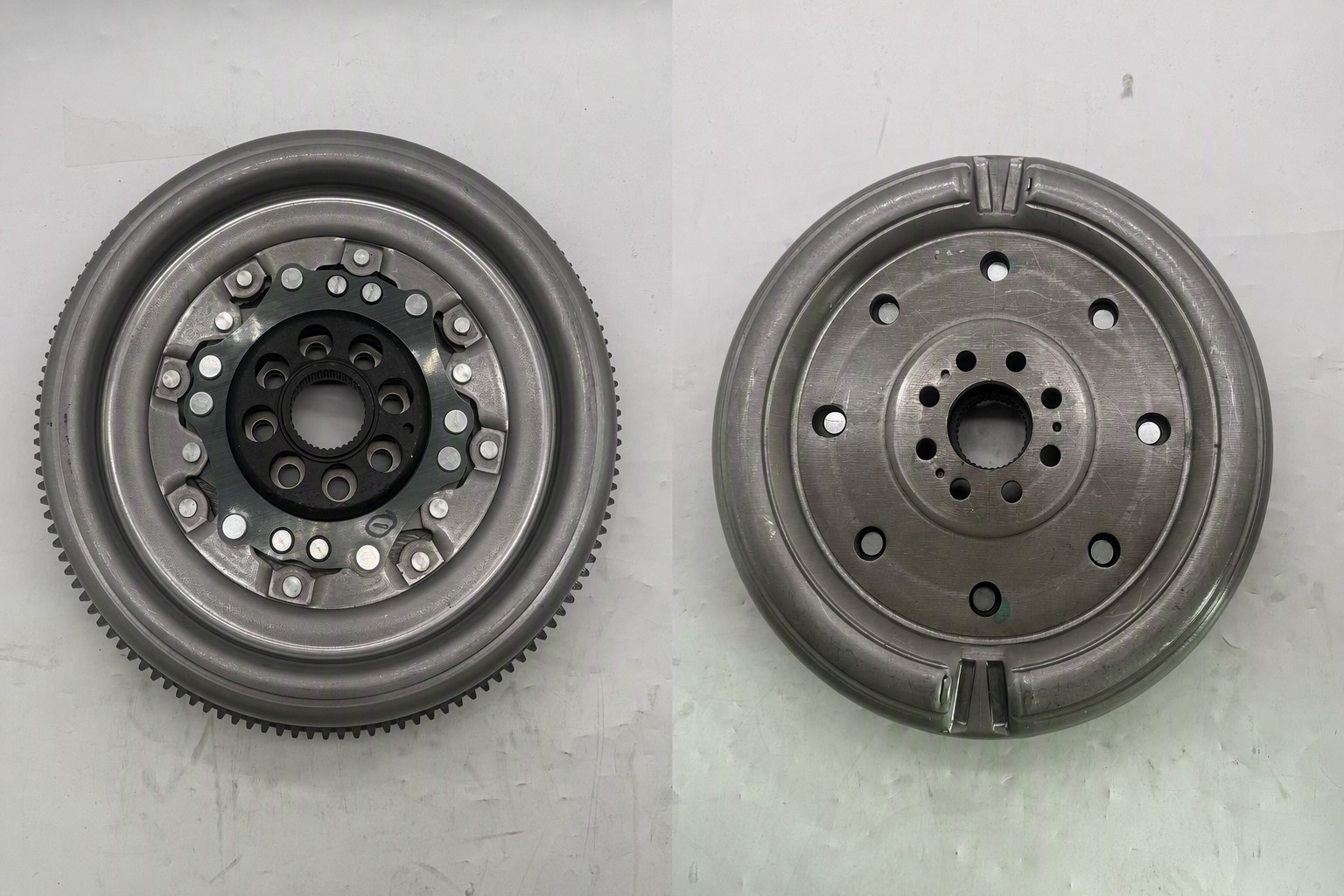
| S0011 | Flywheel assembly, 129 teeth x 8 holes | VW Passat B7 / CC / Magotan 2.0T (DQ250 / 02E) | LUK: 4150736090; OE: 06J105266AE |
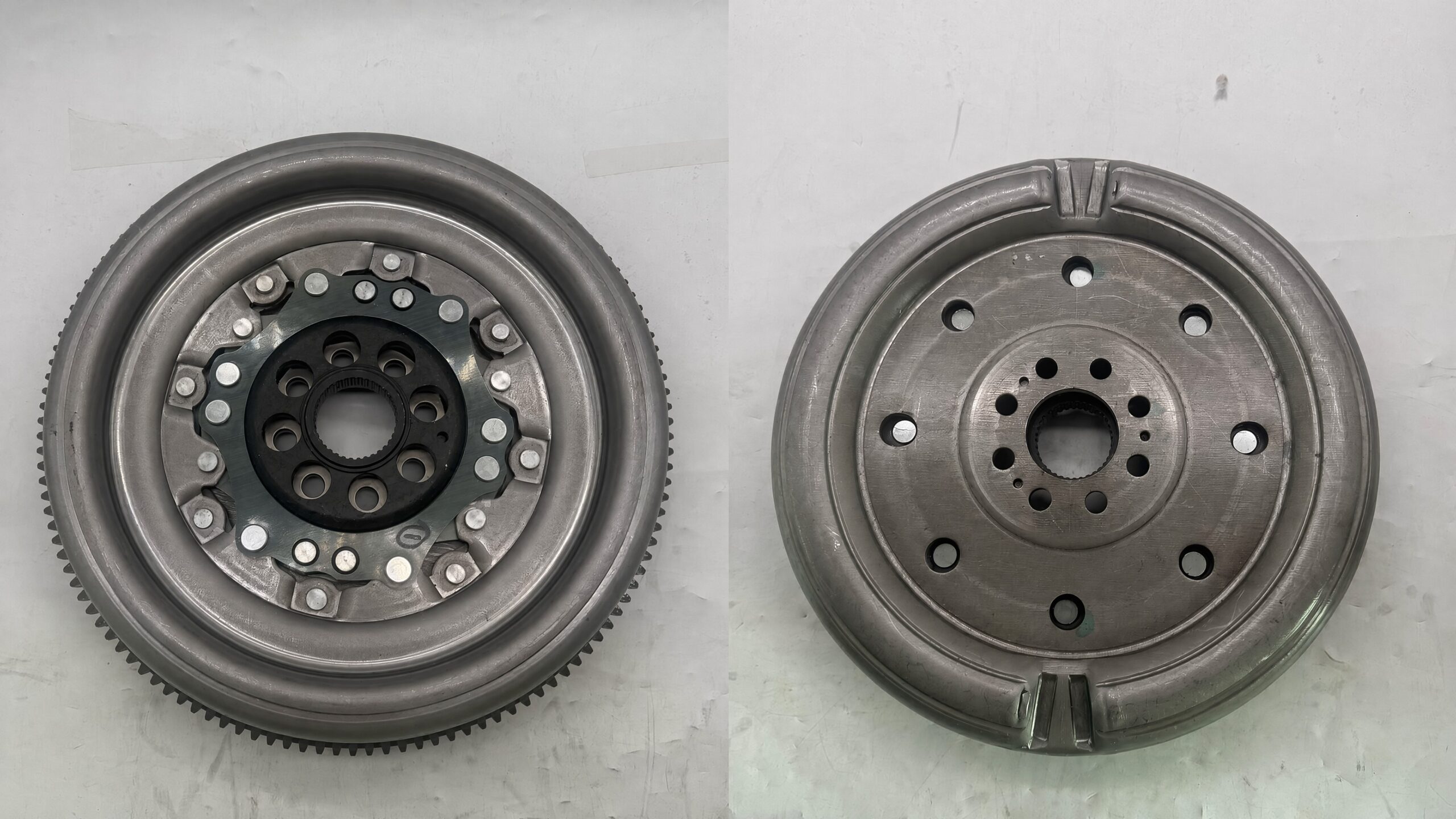
| S0012 | Flywheel assembly, 132 teeth x 8 holes | VW Passat B7 / Scirocco / Magotan 2.0TSI (DQ250 / 02E) | OE: 06J105266D |
| S0010 | Flywheel assembly, 132 teeth x 8 holes | Audi A3 8PA 1.8T Sportback, dry DCT DQ200 (2006-2014) / Sagitar / Magotan / Touran / Tiguan 1.8T | LUK: 4150503090; OEM: 06J105266G |
| S0009 | Flywheel assembly, 129 teeth x 8 holes | VW Passat / Magotan / CC 1.8T | LUK: 4150844090 / 4150793100; OEM: 06J105266AM |
| S0008 | Flywheel assembly, 135 teeth x 8 holes | VW Teramont / Tayron 2.0T SUV / Skoda Superb 2.0T (DQ381), Gen 3 EA888 | OE: 06K105266AC |
| S0004 | Flywheel assembly, 6 holes, 132 teeth | VW Lavida / Bora / Sagitar 1.4T | OEM: 03C 105 266 J |
| S0003 | Flywheel assembly, 6 holes, 129 teeth | VW Lavida / Bora / Sagitar 1.4T | OEM: 03C 105 266 S |
Flywheel Product Images
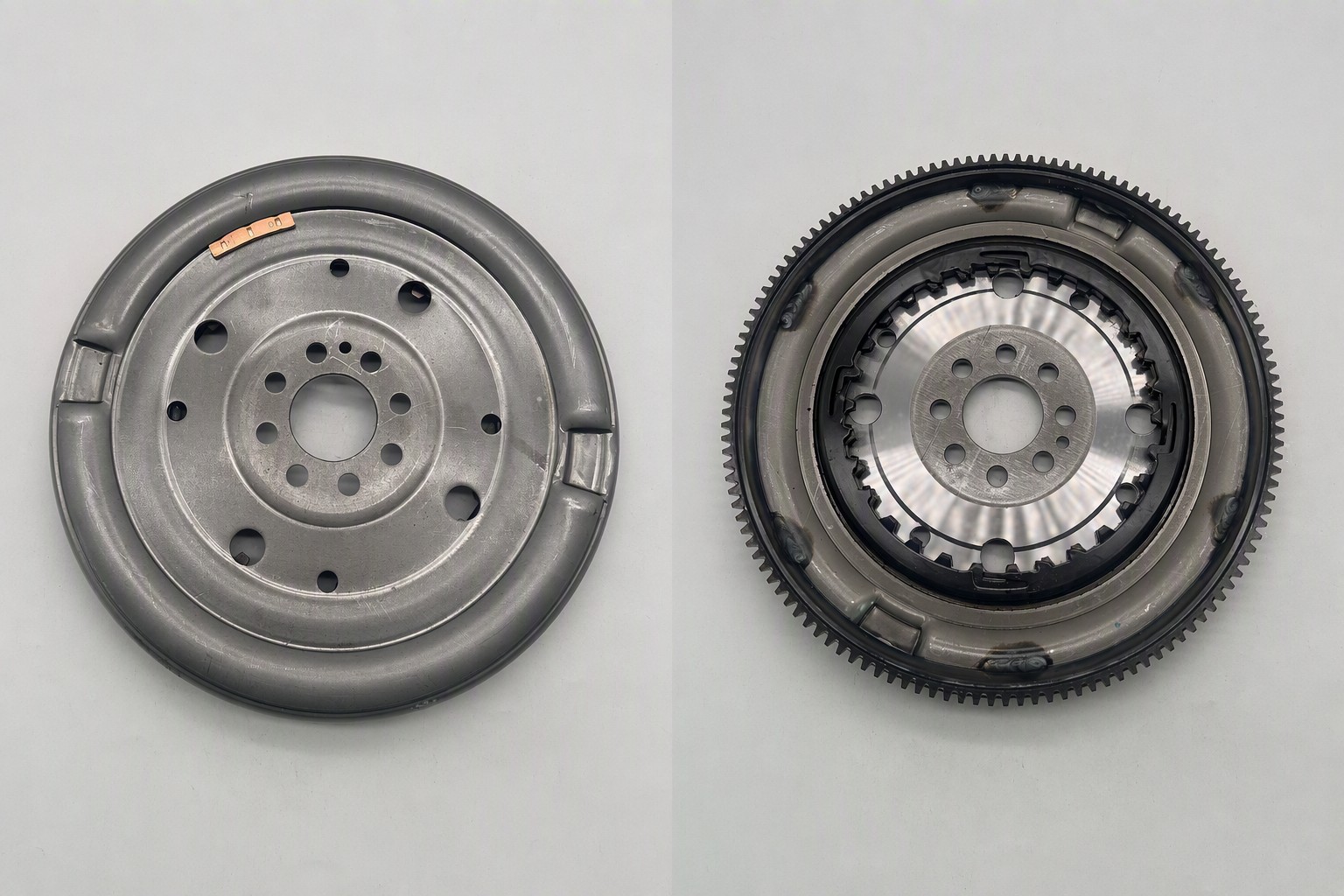
The images below show each flywheel assembly from both the clutch-facing and engine-facing sides. Reference codes correspond to the table above.
S0005 — Porsche Panamera 970
S0006 — Kia K3 / Hyundai Elantra 1.4T
S0011 — VW Passat B7 / CC / Magotan 2.0T (DQ250)
S0012 — VW Passat B7 / Scirocco / Magotan 2.0TSI (DQ250)
S0010 — Audi A3 8PA 1.8T / Sagitar / Magotan / Touran / Tiguan 1.8T
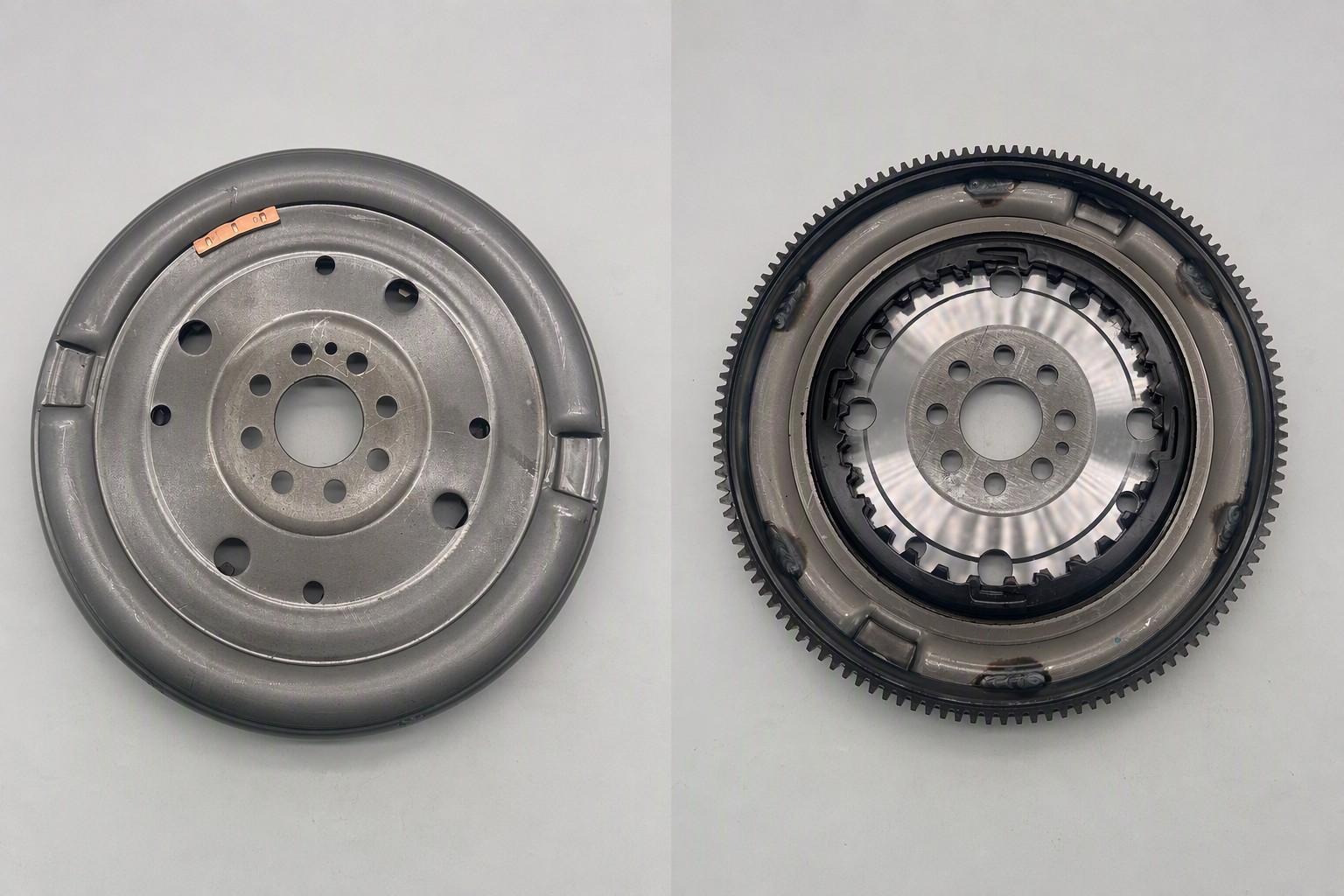
S0008 — VW Teramont / Tayron 2.0T / Skoda Superb 2.0T (DQ381)
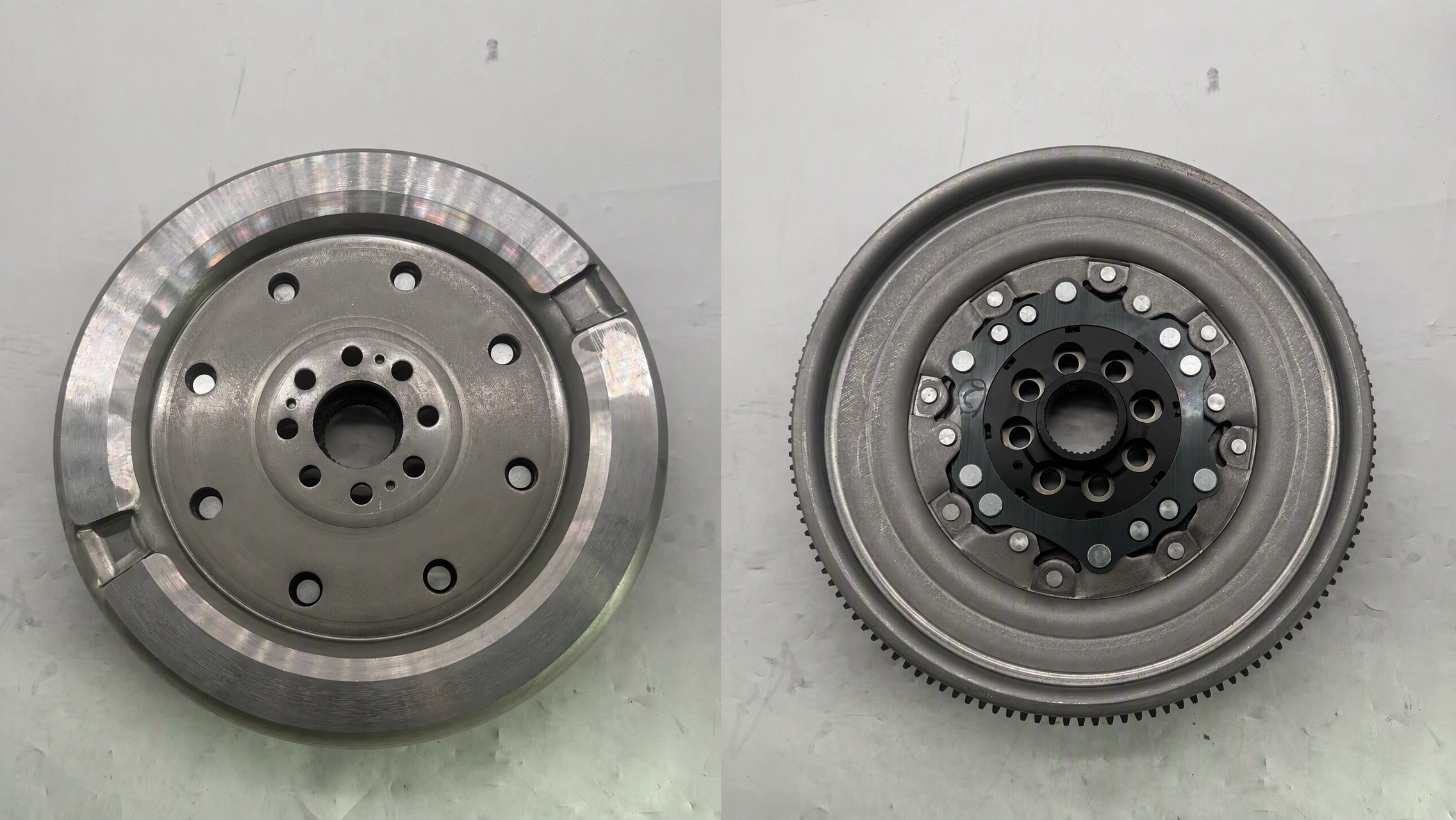
S0004 — VW Lavida / Bora / Sagitar 1.4T (132 teeth)
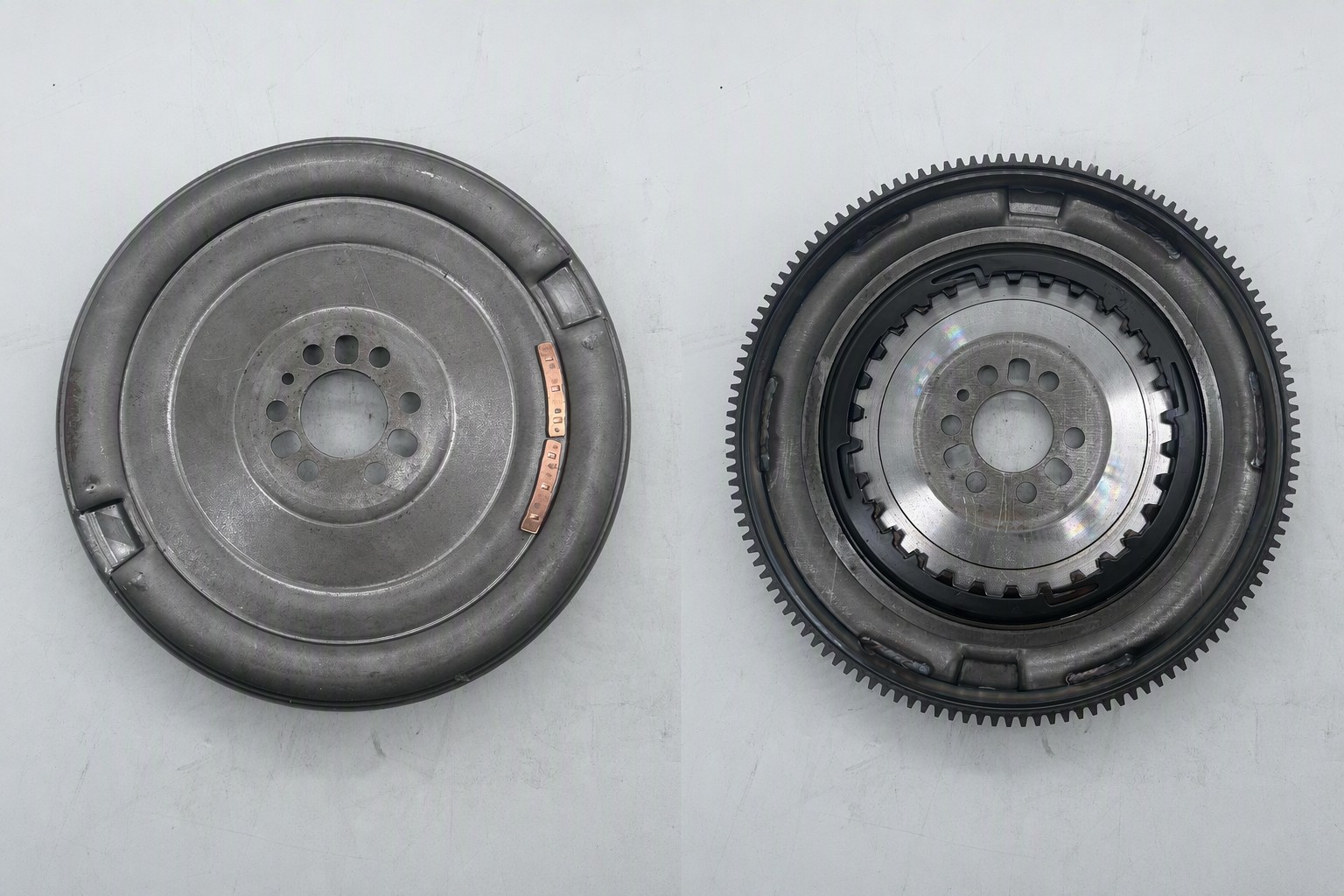
S0003 — VW Lavida / Bora / Sagitar 1.4T (129 teeth)
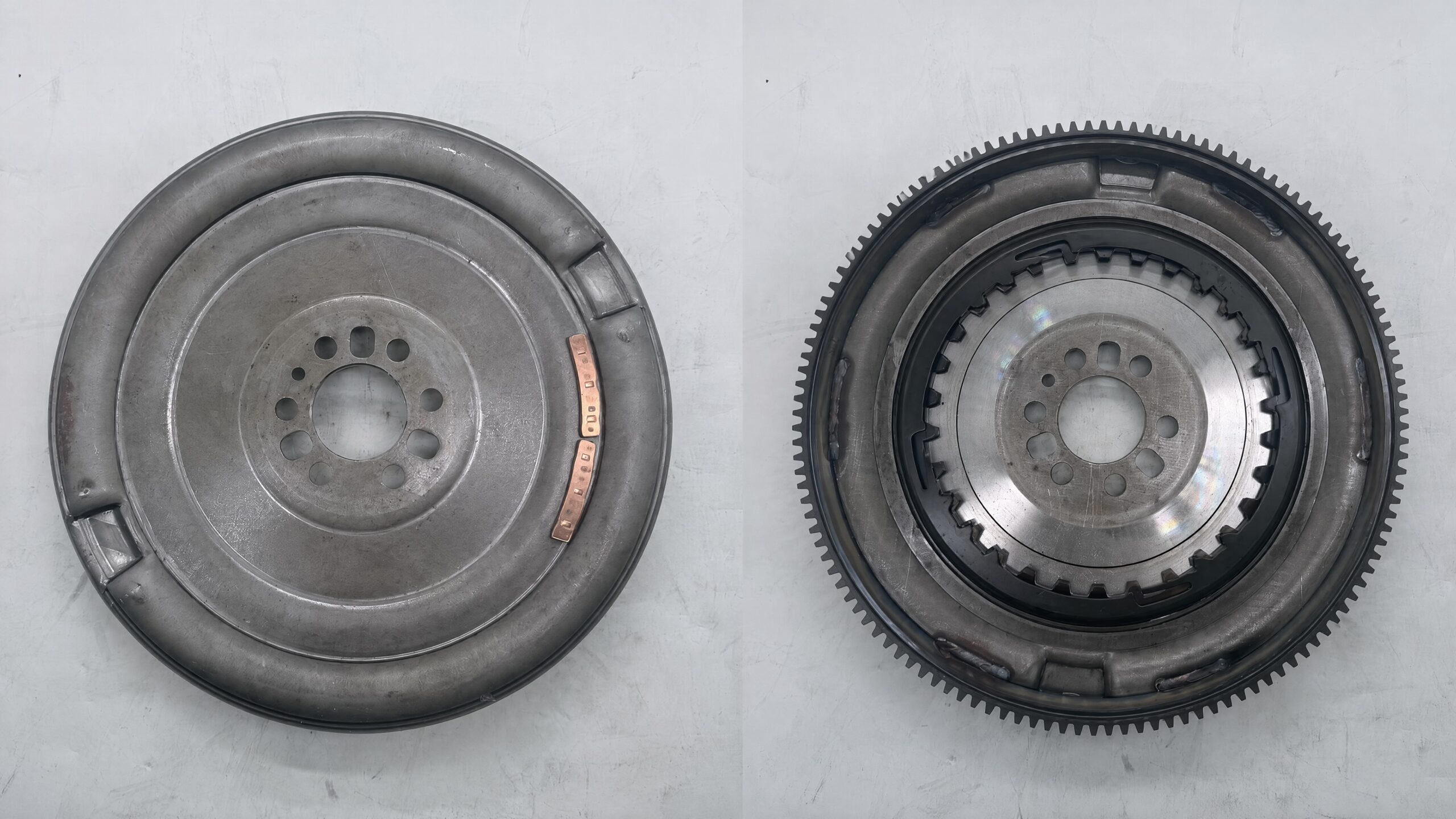
S0009 — VW Passat / Magotan / CC 1.8T
Understanding Arc Springs: The Core of Dual Mass Flywheel Damping
At the heart of every dual mass flywheel is a set of arc springs — helical compression springs bent along a circular arc that fit inside the annular cavity between the primary and secondary flywheel masses. This curved geometry is what allows the DMF’s two masses to rotate slightly relative to one another, absorbing torsional pulses from the engine.
How Arc Springs Absorb Torsional Vibration
As the engine’s cylinders fire, the crankshaft delivers power in pulses rather than a smooth stream. These pulses create torsional vibration — rapid angular acceleration and deceleration of the rotating assembly. When the flywheel’s two masses rotate relative to each other, the arc springs compress and extend along their curved path, converting this kinetic energy into stored spring energy and releasing it smoothly. The result is reduced gear rattle, smoother gear changes, and lower noise transmitted to the transmission.
Multi-Stage Stiffness for Variable Load
Unlike a single linear spring, DMF damping systems often combine multiple arc springs arranged in series or parallel to create a multi-stage stiffness curve. This lets the flywheel provide soft damping at idle — where vibration is most noticeable — and firmer resistance under high torque, without bottoming out during hard acceleration. A typical arc spring set spans a working angle of roughly 60° to 180° along the flywheel circumference, depending on the damping requirement.
Materials and Manufacturing
Arc springs are manufactured from oil-tempered or alloy spring steel and typically undergo shot peening to introduce compressive residual stress on the surface. This surface treatment significantly improves fatigue life, which is essential for a component subjected to continuous cyclic loading over a vehicle’s service life. Dimensional consistency of the curved profile is also critical, since any deviation changes the spring’s contact pressure and damping characteristic.
All nine flywheel assemblies listed in the table above rely on this same arc-spring damping principle. At Hengsheng Spring, we manufacture custom arc springs to precise force and angular specifications, supporting DMF rebuilds and OEM drivetrain programs alike.
Why OE Part Number Matching Matters
Installing a flywheel with the wrong tooth count or bolt pattern can cause starter engagement failure, crankshaft imbalance, and premature clutch wear. Always verify the OE number stamped on your original part against the cross-reference table before ordering.
For technical specifications, material data, and custom flywheel manufacturing inquiries, contact our engineering team.