
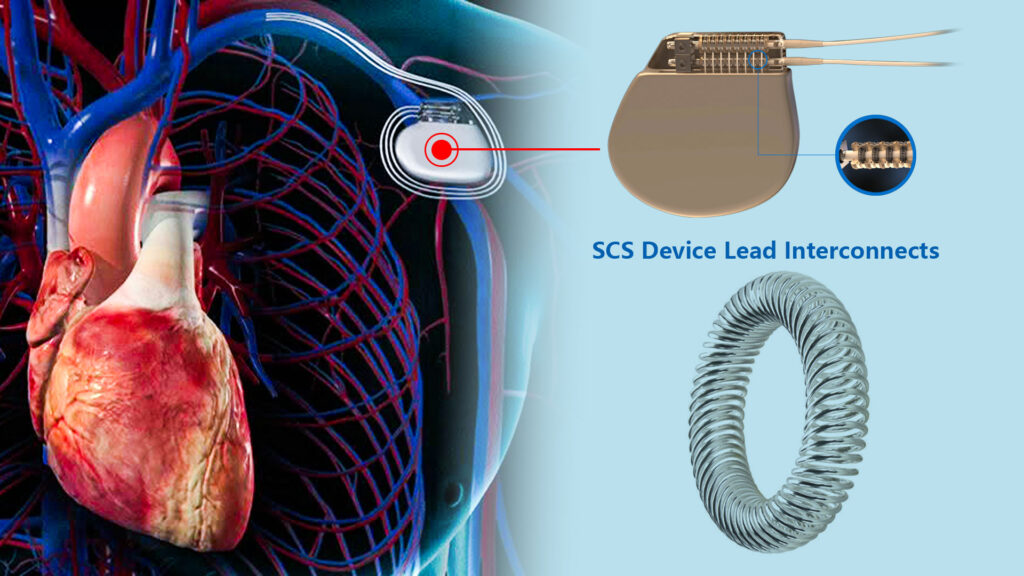
Why Smaller Medical Devices Require Smarter Connection Technologies
The custom spring manufacturing industry is entering a new era of miniaturization. From implantable cardiac devices and neurostimulation systems to wearable health monitors and minimally invasive surgical tools, manufacturers are under increasing pressure to make devices smaller, lighter, and more reliable.
Patients benefit from reduced surgical trauma, faster recovery times, and improved comfort. Physicians gain access to more advanced treatment options. However, as device dimensions shrink, engineers face a significant challenge:
How can electrical and mechanical connections remain reliable inside increasingly compact medical equipments?
canted coil springOne solution gaining attention across the medical technology sector is the canted coil spring.
Originally developed for demanding electrical and mechanical applications, canted coil spring technology is now helping medical device manufacturers achieve reliable performance in environments where space is extremely limited and failure is not an option.
The Growing Trend Toward Miniaturized Medical Devices
Modern healthcare technologies are moving toward smaller and more sophisticated systems.
Examples include:
- Implantable cardiac rhythm management devices
- Neurostimulation systems
- Insulin delivery systems
- Hearing implants
- Endoscopic surgical instruments
- Wearable monitoring devices
- Drug delivery mechanisms
As device size decreases, every internal component must become more compact while maintaining high levels of performance and reliability.
This creates challenges in:
- Electrical connectivity
- Mechanical retention
- Signal transmission
- Long-term durability
- Manufacturing tolerances
Traditional contact technologies often struggle to meet these requirements.
Why Reliable Electrical Contacts Matter in Medical Devices
For implantable and life-supporting devices, electrical connections are critical.
A poor connection can lead to:
- Signal interruption
- Increased electrical resistance
- Device malfunction
- Reduced battery efficiency
- Premature component failure
Unlike consumer electronics, medical devices often operate continuously for years without maintenance.
Engineers therefore require connection systems that provide:
- Stable contact force
- Low contact resistance
- High cycle life
- Corrosion resistance
- Long-term reliability
This is where canted coil springs offer unique advantages.
What Is a Canted Coil Spring?
A canted coil spring consists of individual coils wound at a specific angle relative to the spring axis.
Unlike conventional compression springs or stamped contacts, each coil acts as an independent contact point.
This design provides:
- Multiple conductive contact points
- Near-constant contact force
- Low insertion and extraction forces
- Excellent tolerance compensation
- Reliable electrical performance
Because the spring maintains consistent force across a wide range of deflection, it can accommodate dimensional variations without losing contact integrity.
Supporting Device Miniaturization
One of the biggest engineering challenges in modern medical devices is reducing component size without sacrificing functionality.
Traditional electrical contacts often require:
- Larger mating areas
- Higher insertion forces
- Additional retention mechanisms
Canted coil springs can achieve reliable connectivity within extremely compact spaces.
Benefits include:
Reduced Connector Size
The spring can be integrated directly into miniature connectors, reducing overall assembly dimensions.
Higher Contact Density
Multiple contact points can be achieved within a small footprint.
Simplified Design
Engineers can eliminate additional components while maintaining electrical quality control.
These advantages help manufacturers create smaller and lighter devices without compromising performance.
Maintaining Reliable Performance Over Time
Medical devices are expected to perform consistently for many years.
Implantable systems may experience:
- Continuous physiological movement
- Temperature fluctuations
- Moisture exposure
- Mechanical vibration
The connection system must withstand these conditions without degradation.
Canted coil springs distribute mechanical loads across multiple coils rather than concentrating stress at a single point.
This results in:
- Improved fatigue resistance
- Lower wear rates
- Consistent contact force
- Extended service life
For critical medical applications, this long-term reliability is essential.
Biocompatible Materials for Medical Applications
Material selection plays a major role in medical device design.
Many medical-grade canted coil springs are manufactured from advanced alloys that offer:
- Corrosion resistance
- High strength
- Biocompatibility
- Excellent fatigue performance
Common materials include:
MP35N Alloy
Widely used in implantable devices because of its:
- Exceptional corrosion resistance
- High mechanical strength
- Long fatigue life
Stainless Steel
Suitable for many medical instruments and external medical equipment.
Specialized Medical Alloys
Used in applications requiring enhanced performance under demanding physiological conditions.
These materials help ensure reliable operation throughout the device lifecycle.
Applications of Canted Coil Springs in Medical Technology
As medical devices continue to evolve, canted coil springs are being adopted across a wide range of applications.
Implantable Cardiac Devices
Used in connectors that require stable electrical performance over many years.
Examples include:
- Pacemakers
- Defibrillators
- Cardiac monitoring systems
Neurostimulation Systems
Modern neurological therapies rely on precise electrical stimulation.
Canted coil spring contacts help ensure:
- Stable signal transmission
- Consistent electrical performance
- Reliable connectivity
Hearing Implant Systems
Miniature electrical contacts are required in extremely compact assemblies.
The spring’s small size and consistent force make it an effective solution.
Surgical Instruments
Reusable and minimally invasive instruments benefit from:
- High cycle life
- Wear resistance
- Compact design
Drug Delivery Devices
Advanced drug delivery systems require reliable internal mechanisms and electrical interfaces.
Canted coil spring technology helps support both functions.
Why Medical Device Manufacturers Are Choosing Canted Coil Springs
Several trends are driving adoption:
Increasing Device Complexity
Smaller devices require more sophisticated connection technologies.
Higher Reliability Requirements
Medical regulations demand consistent performance and reduced failure risk.
Longer Service Life Expectations
Implantable systems are expected to operate for many years.
Continuous Miniaturization
Manufacturers need solutions that save space without sacrificing functionality.
Canted coil springs address all of these challenges simultaneously.
The Future of Medical Device Connectivity
The next generation of medical devices will become even smaller, smarter, and more connected.
Emerging technologies such as:
- Implantable sensors
- Brain-computer interfaces
- Advanced neurostimulation systems
- Remote patient monitoring devices
will require connection solutions capable of delivering exceptional performance in extremely limited spaces.
Canted coil spring technology is well positioned to support these advancements through:
- Compact designs
- Reliable electrical contact
- Long-term durability
- Excellent tolerance compensation
As the healthcare industry continues to innovate, demand for high-precision spring-based connection systems is expected to grow rapidly.