
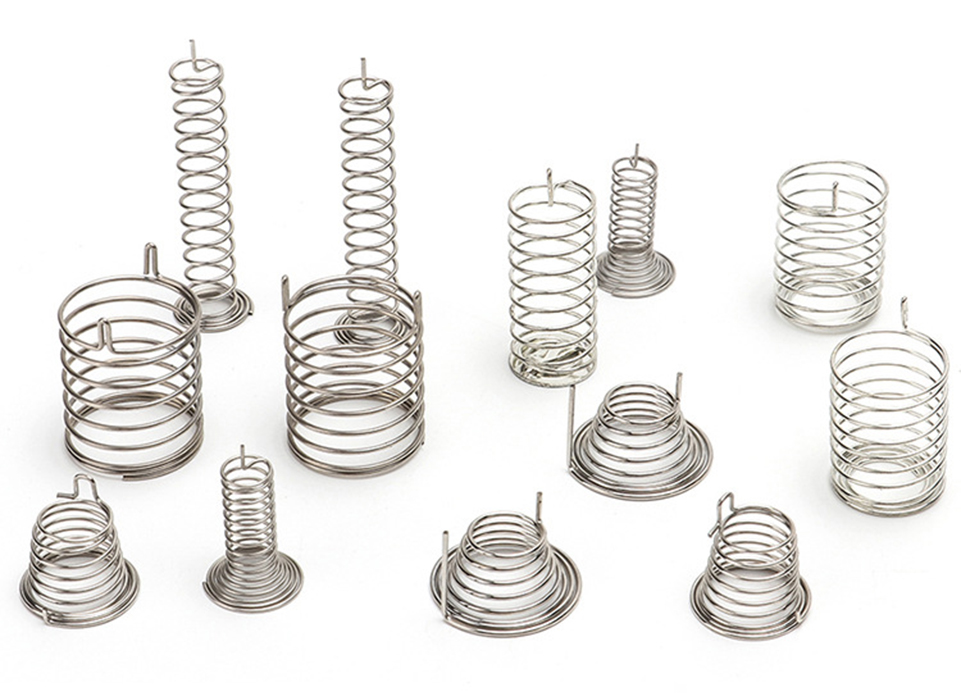
What Is a Touch Spring?
A touch spring is a type of conductive spring element used in capacitive or resistive touch-sensitive devices. Typically made of stainless steel or beryllium copper, it features a small coil or dome shape designed to provide both tactile feedback and electrical conductivity. These springs are widely used in products like touch switches, membrane keypads, control panels, and smart home interfaces.
Why Touch Springs Matter in Modern Design
In today’s digital world, users expect intuitive and responsive interaction. Touch springs help bridge the gap between mechanical input and electronic response. Because they offer excellent durability, stable conductivity, and a consistent rebound force, they serve as a reliable solution in both industrial and consumer electronics.
Additionally, touch springs contribute to the miniaturization of electronic devices. Since they can be customized to extremely small sizes while maintaining mechanical and electrical integrity, they’re ideal for compact systems.
Key Advantages of Touch Springs
To fully appreciate their versatility, consider the main benefits of touch springs:
| Feature | Description |
|---|---|
| Compact Design | Enables use in small or space-constrained assemblies |
| Long Lifespan | Maintains function over hundreds of thousands of cycles |
| Reliable Conductivity | Ensures low-resistance electrical contact |
| Customizable Force | Can be designed for specific tactile feedback needs |
| Material Versatility | Commonly made of 301/304 stainless steel, phosphor bronze, or BeCu |
Application Scenarios
Touch springs are found in various industries. For example:
-
Home Appliances: Control buttons in ovens, dishwashers, or washing machines
-
Medical Devices: User interfaces in portable monitors or diagnostic tools
-
Automotive Systems: Dashboard controls and infotainment panels
-
Consumer Electronics: Smart switches, keypads, and handheld gadgets
In all these sectors, the spring plays a crucial role in maintaining contact reliability and tactile response even under frequent operation or vibration.
Design Considerations
When designing a touch spring, engineers must balance several parameters:
-
Spring Force: Enough to provide tactile feel without requiring excessive pressure
-
Travel Distance: Optimized for user comfort and actuation speed
-
Material Selection: Choosing a material that resists corrosion and fatigue
-
Mounting Method: Ensuring proper alignment and reliable connection with the PCB
Moreover, designers often run into trade-offs. For instance, increasing spring force can improve durability but may reduce the softness of the touch. A well-calibrated design takes all factors into account.
Manufacturing and Assembly
Most touch springs are produced via stamping or coiling, followed by precision heat treatment to improve resilience. During assembly, they are often:
-
Inserted manually into domes or buttons
-
Soldered onto PCBs with conductive pads
-
Integrated into silicone rubber keypads with carbon pills
Each method impacts the spring’s electrical resistance and tactile consistency.
Conclusion
Touch springs are a subtle yet essential component in modern electronics. Their compact size, electrical performance, and tactile reliability make them a favored choice for manufacturers aiming to create high-performance user interfaces.
As technology continues to evolve, touch springs will remain a key player in the field of interactive design. If you’re looking to optimize your touch-sensitive systems, selecting the right spring—and the right supplier—can make all the difference.