
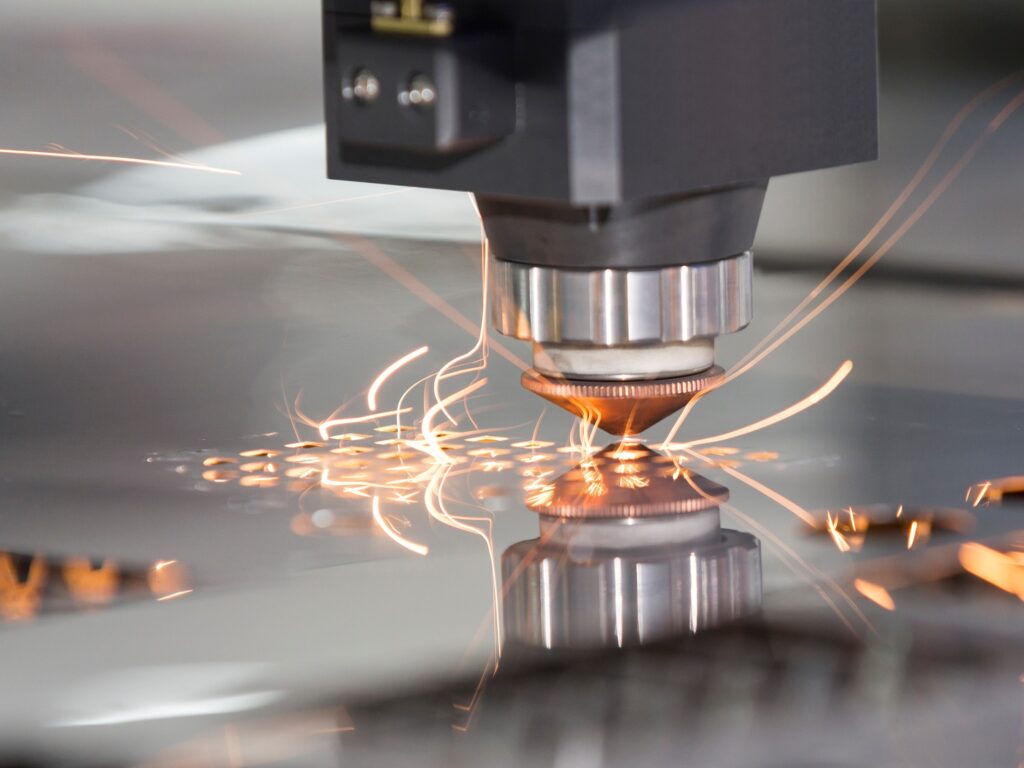
Cutting technology plays a critical role in modern manufacturing, especially for metals, composites, plastics, and precision parts. Among the most widely used methods, laser cutting, waterjet cutting, and plasma cutting each offer unique advantages in terms of speed, accuracy, material compatibility, and cost efficiency.
This comprehensive comparison helps engineers, procurement teams, and manufacturers choose the best process based on their project requirements.
1. Laser Cutting
How It Works
Laser cutting uses a focused, high-energy laser beam to melt or vaporize material, producing extremely fine and clean cuts.
Best For
-
Stainless steel, aluminum, carbon steel
-
Thin to medium-thickness sheets (0.2–20 mm)
-
Precision parts, enclosures, electronics components
Advantages
-
Very high accuracy (±0.05 mm)
-
Clean edges with minimal post-processing
-
Fast cutting speed on thin metals
-
Excellent for intricate shapes
Limitations
-
Not ideal for very thick materials
-
Reflective metals require special laser types
-
Heat-affected zone (HAZ) exists
2. Waterjet Cutting
How It Works
Waterjet cutting uses a high-pressure stream of water mixed with abrasive materials to cut through metal, stone, glass, composites, and heat-sensitive materials.
Best For
-
Thick metals (up to 200 mm)
-
Heat-sensitive materials (copper, titanium, composites)
-
Materials prone to deformation
Advantages
-
No heat-affected zone (cold cutting)
-
Works on almost any material
-
High precision for thick plates
-
Leaves smooth edges
Limitations
-
Slower than laser for thin metals
-
Higher operating cost (abrasives)
-
Not ideal for extremely tight tolerances
3. Plasma Cutting
How It Works
Plasma cutting uses an electrical arc and ionized gas to melt and blow away material, making it ideal for fast cutting of thick metal plates.
Best For
-
Steel, stainless steel, aluminum
-
Medium to thick plates (6–50 mm)
-
Structural components, industrial fabrication
Advantages
-
Very fast cutting for thick metal
-
Lower equipment cost
-
Great for heavy-duty industrial applications
Limitations
-
Lower precision compared to laser or waterjet
-
Larger heat-affected zone
-
Rougher edges may require secondary processing
4. Comparison Summary
| Feature / Process | Laser Cutting | Waterjet Cutting | Plasma Cutting |
|---|---|---|---|
| Precision | ★★★★★ | ★★★★☆ | ★★☆☆☆ |
| Speed (thin metals) | ★★★★★ | ★★☆☆☆ | ★★★☆☆ |
| Speed (thick metals) | ★★☆☆☆ | ★★★☆☆ | ★★★★★ |
| Edge Quality | Excellent | Excellent | Moderate |
| Material Compatibility | Metals & non-metals | Almost all materials | Conductive metals only |
| Heat Affected Zone | Small | None | Large |
| Cost | Moderate | High | Low |
Which One Should You Choose?
Choose Laser Cutting If:
You need high precision, clean edges, and complex shapes in thin/medium metal sheets.
Choose Waterjet Cutting If:
You need to cut thick materials or heat-sensitive metals with no thermal distortion.
Choose Plasma Cutting If:
You want fast, cost-effective cutting of thick steel plates for structural or heavy-duty applications.
Our Capabilities
With 20+ years of manufacturing experience, our facility provides all three cutting technologies—laser, waterjet, and plasma—along with CNC machining, bending, welding, stamping, and full custom fabrication.
We help customers choose the most suitable process based on cost, precision, and material requirements.
Hello hengshengspring.com Owner!