

Why Medical Grade Springs Command a Premium: A Guide to Ultra-Clean Ti-6Al-4V Production
In the medical device industry, a spring is never “just a spring.” Whether it functions as a recoil component in a drug delivery pen or
Performance Pinnacle in Spring Manufacturing: A Deep Dive into Ti-6Al-4V Titanium Alloy Springs
In the world of precision spring manufacturing, material selection dictates the boundaries of performance. While carbon steel and stainless steel remain the industry “workhorses,” the
Spring Relaxation in High-Temperature Environments? A Comparative Analysis of Inconel X-750 vs. Stainless Steel
In the design of aerospace engines, fuel injection systems, and industrial gas turbines, springs are often the “heartbeat” of the mechanical system. However, when operating
Mastering Insertion and Retention Forces in Quick-Connect Systems
In high-performance fluid handling, medical devices, and electrical interconnects, the “click” of a successful connection is more than just a sound—it is the result of
Flat Wire Springs vs. Round Wire Springs: An Engineering Comparison of Stress and Fatigue Life
Introduction In spring design, engineers rarely select a spring type based on convention alone. Instead, they evaluate load requirements, available space, fatigue life, and long-term
Flat Wire Springs: High-Performance Solutions for Compact and High-Load Applications
Introduction As modern mechanical systems continue to evolve toward higher loads, longer service life, and more compact designs, traditional round wire springs often reach their
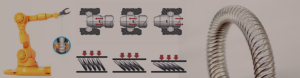
Why Canted Coil Springs Are the Best Choice for Constant Contact Force
A Performance Comparison with Wave Springs and Helical Springs 1. How Engineers Typically Select Contact Springs In electrical and electromechanical system design, engineers rarely prioritize

Canted Coil Springs in Electric Vehicle Battery Management Systems
Addressing the Dual Challenge of Electrical Conductivity and EMI Shielding 1. From Commodity Components to System-Critical Elements Historically, springs have been treated as standardized mechanical