
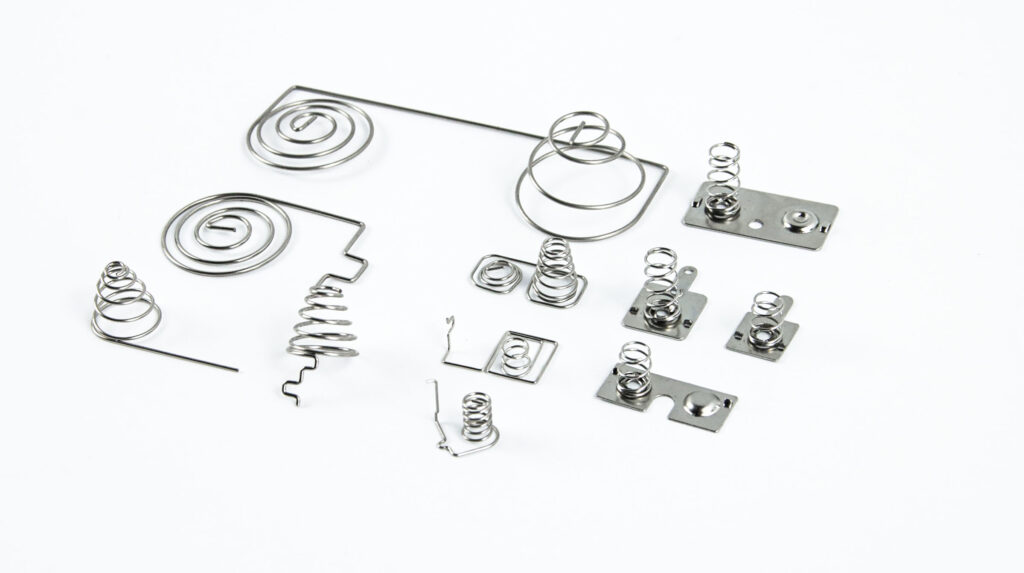
When you think of battery springs, you probably picture the coiled wire inside a remote control that helps connect batteries. But battery springs come in a variety of designs, and most of them are custom-made based on the product’s structure and function.
Battery springs are commonly divided into three categories:
🔹 Positive terminal springs
🔹 Negative terminal springs
🔹 Dual-terminal springs (handling both poles)
Manufacturers typically use nickel-plated carbon steel wire to ensure strong elasticity and stable conductivity. Now let’s explore how to choose the right battery spring and which materials are most effective.
1. Key Considerations When Choosing Battery Spring
🔹 Prioritize Safety
A well-designed spring should feature inward-bent ends to prevent injury during handling or installation. This small detail ensures both user safety and product reliability.
🔹 Ensure Excellent Conductivity
Choose carbon steel wire for its strength and conductivity. Apply a copper base layer followed by nickel plating to improve corrosion resistance and surface conductivity. This process should meet the 5% salt spray test for 24 hours.
If your product requires even better electrical contact, consider using gold, silver, or tin coatings. While copper wire offers better conductivity, it doesn’t match carbon steel’s elasticity.
🔹 Focus on Structural Precision
Make sure the contact point aligns precisely with the battery terminal. An oversized contact area increases the risk of short circuits. Also, check that the spring fits firmly in the housing to avoid misalignment during use.
🔹 Choose Smart Packaging for Production
Tangled springs can slow down your assembly line. To prevent this, opt for blister packaging or small-batch packing that keeps springs separated and easy to handle during mass production.
2. Common Materials Used for Battery Springs
Selecting the right material depends on your product’s structure, value, and the environment in which it will operate. Below is a quick comparison of typical choices:
| Material | Features | Best for |
|---|---|---|
| Cold Rolled Steel | Affordable, easy to plate, widely used | General electronics in dry conditions |
| Manganese Steel (65Mn) | Strong elasticity after heat treatment, solder-friendly | Snap-in or press-fit springs |
| Phosphor Bronze | Rust-resistant, low resistance, high conductivity, excellent for soldering | Premium devices or damp environments |
| Brass | Good corrosion resistance and conductivity | Humid environments, though higher in cost |
| Stainless Steel | Strong and durable, but difficult to solder | Non-soldered parts with high elasticity demand |
💡 Tip: If soldering is required, manganese steel or phosphor bronze are better than stainless steel.
Final Thoughts
Battery springs may be small, but they have a big impact on product performance and safety. From selecting the right material and plating, to ensuring a safe structure and efficient packaging—every detail counts.
Partnering with a professional spring manufacturer can help you create solutions that match your product’s exact needs.